
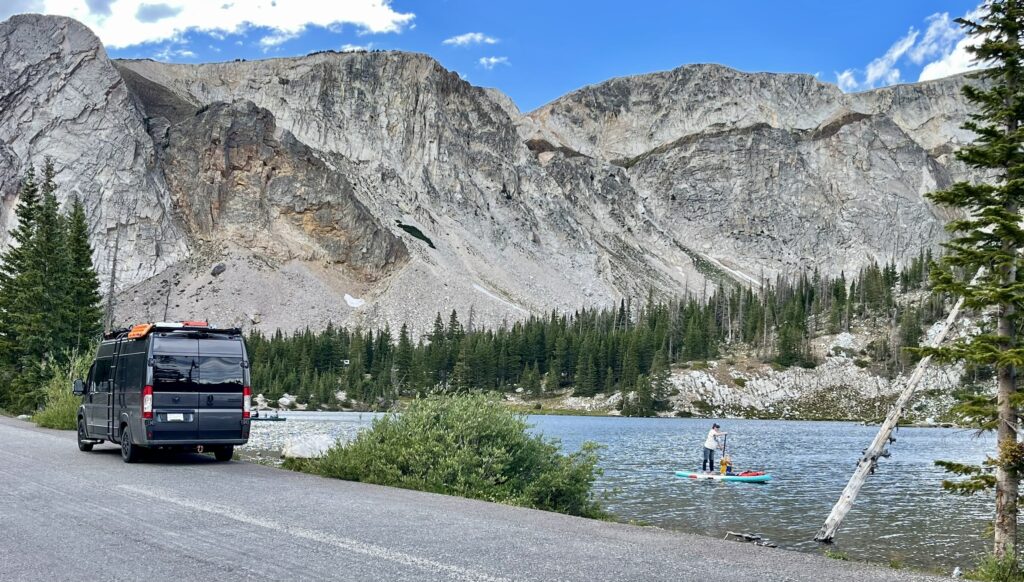
Every year, KOA publishes its Camping & Outdoor Hospitality Report, a national look at camping, RV travel, outdoor hospitality, and the changing motivations of travelers who spend time outdoors. While the report is not specific to scenic byways or heritage corridors, the overlap in travel behavior is hard to ignore.
Many camping and RV travelers are looking for exactly the kinds of experiences byways and heritage corridors are designed to provide: scenic landscapes, small towns, historic places, outdoor recreation, local food, flexible itineraries, and the freedom to explore at their own pace.
That makes camping data useful far beyond the campground industry. For byways, heritage corridors, and route-based destinations, it offers a window into how today’s travelers plan trips, choose accommodations, move through a region, and define a meaningful travel experience.
Campers are road-trip travelers
One of the strongest connections between camping and corridor-based tourism is the road trip. Campers are often not traveling to a single attraction and stopping there. They are moving through landscapes, linking together communities, and building trips around the places they discover along the way.
That is also how many byway and heritage corridor visitors travel. They may begin with a scenic drive, a historic site, a trail, a small town, or a national park gateway, but the experience is shaped by everything in between: overlooks, roadside businesses, local restaurants, visitor centers, campgrounds, trailheads, downtowns, and unexpected stops.
This is where byways and heritage corridors have a natural advantage. They are already organized around movement, connection, and story. The opportunity is to make that experience easier to understand and easier to navigate for travelers who are building multi-stop trips.
For camping and RV travelers, that might mean clearer information about route length, drive time, road conditions, pullouts, camping options, public lands, nearby towns, pet-friendly stops, and things to do within a short distance of a campground. It also means helping travelers understand why the route matters — what stories, landscapes, and communities make the journey worth taking.
RV travelers need practical information, not just inspiration
In my own limited byway survey work, roughly 20% of byway travelers appear to prefer RVs as their lodging option. That is not the majority of travelers, but it is a large enough share to matter — especially for routes that already attract scenic drivers, retirees, families, outdoor recreation visitors, and long-distance road trippers.
RV travelers often need more detailed trip-planning information than other travelers. A beautiful photo or a general route description may inspire the trip, but it does not answer the practical questions that determine whether the route feels manageable.
Can a large RV safely travel the full route? Are there low clearances, steep grades, tight turns, seasonal closures, gravel sections, or parking limitations? Where can travelers find campgrounds, dump stations, fuel, groceries, repairs, and potable water? Are there scenic overlooks or attractions with RV-friendly parking? Are there recommended route segments for larger vehicles?
These details may not sound glamorous, but they are part of the visitor experience. When they are missing, travelers may avoid the route, shorten the trip, or arrive unprepared. When they are easy to find, they build confidence and make the corridor more welcoming.
For byways and heritage corridors, RV readiness does not necessarily mean redesigning the entire route for RVs. It means being honest, helpful, and specific. Good information allows travelers to make good decisions.
Campgrounds are visitor experience infrastructure
Campgrounds are often treated as lodging providers, but for byways and heritage corridors they can be much more than that. They can serve as orientation points, information hubs, itinerary anchors, and stewardship partners.
A campground guest may be staying two or three nights in a region, asking front-line staff what to do, where to eat, which scenic drive to take, which trail is best for their family, or where to find local history. In that moment, the campground becomes part of the corridor’s visitor information system.
This is especially important for heritage corridors and byways that cross multiple jurisdictions. Visitors do not experience the route according to county lines, tourism office boundaries, or agency responsibilities. They experience it as one trip. Campgrounds can help connect the dots between nearby towns, attractions, trails, historic sites, scenic overlooks, and local businesses.
That makes campground operators valuable partners in corridor planning and visitor experience development. They can help identify what travelers are asking for, where they are confused, what information is missing, and which experiences generate the most interest. They can also help communicate responsible travel practices, from campfire safety and pet etiquette to trail stewardship and respect for local communities.
Today’s travelers are seeking meaning, not just amenities
One of the most useful takeaways from camping research is that travelers are not only looking for a place to stay. They are looking for restoration, connection, flexibility, and a sense of meaning.
That should resonate strongly with byways and heritage corridors. These routes are not just transportation corridors. At their best, they help people slow down, notice the landscape, understand local stories, connect with communities, and experience places in a more personal way.
Camping and RV travel fit naturally with that kind of experience. A traveler who chooses to camp may be seeking affordability, but they may also be seeking quiet, night skies, time with family, access to nature, or the freedom to travel without a rigid schedule. Those motivations align with many of the strongest qualities of byways and heritage corridors.
The challenge is that meaningful experiences do not happen automatically. They require thoughtful planning, clear information, good orientation, strong partnerships, and attention to the details that shape a traveler’s day.
A campground stay can become a gateway to a scenic drive. A scenic drive can lead to a historic downtown. A historic site can connect to a local restaurant, a trail, a festival, or a family story. When those connections are visible and easy to follow, the visitor experience becomes richer — and the economic benefits are more likely to spread across the corridor. In 2025, campers spent $66 billion in local communities.
The real value of camping data is not just what it tells us about campers. It is what it asks us to notice about the visitor experience we are creating.
For byways and heritage corridors, that means looking at the route through the eyes of a traveler who may be towing a camper, planning around campground availability, looking for small towns and scenic stops, traveling with pets or children, or trying to turn a few days outdoors into a meaningful journey.
That perspective raises some useful questions:
How easy is it for camping and RV travelers to understand whether this route works for them?
Are campgrounds and outdoor hospitality providers included as visitor experience partners?
Does corridor information connect camping visitors to nearby stories, towns, trails, food, heritage sites, and stewardship expectations?
Are we giving travelers both inspiration and the practical information they need to feel confident?
The answers to those questions can reveal important gaps — and important opportunities.
Camping and RV travelers are already using many of the roads, towns, landscapes, and public lands that byways and heritage corridors are working to promote and protect. The more we understand how and why they travel, the better we can design corridor experiences that are welcoming, well-connected, responsible, and memorable.